
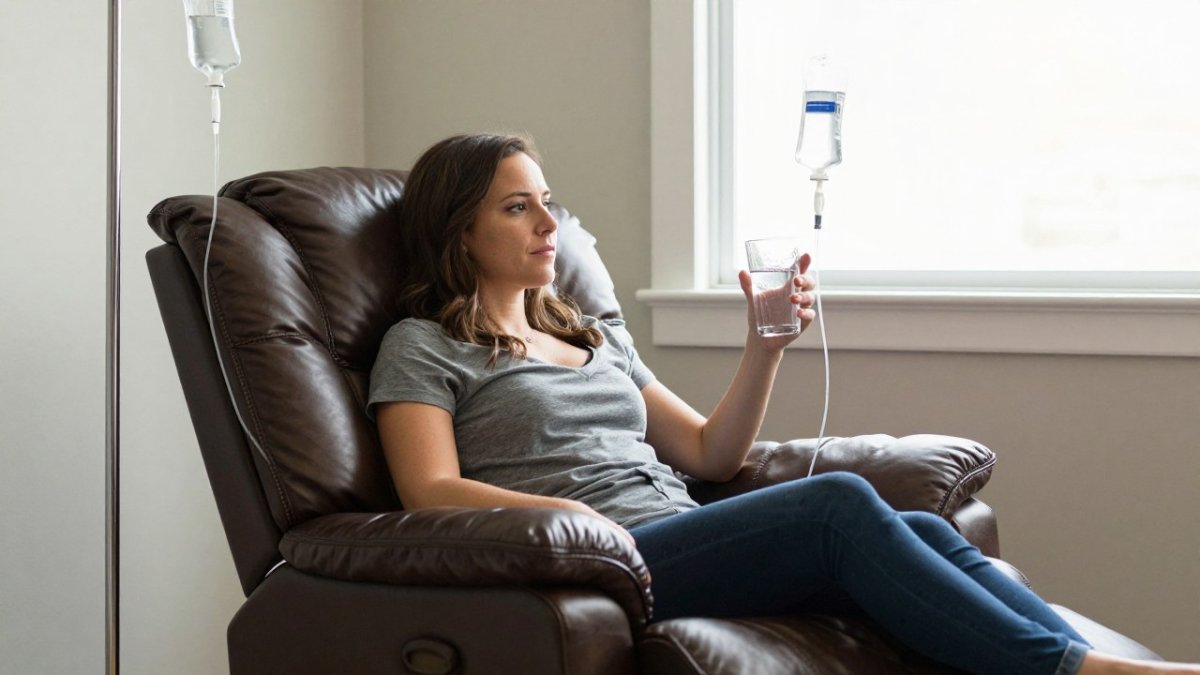
7 Ways to Recover From a Hangover With IV Fluids
Last Updated: November 19, 2026
Quick Summary
Hangover IV fluids are sterile solutions of water, salt, and sometimes vitamins delivered directly into a vein to replace the fluid and electrolytes alcohol causes you to lose. A drip can ease dehydration, thirst, dizziness, and dry mouth, but it does not undo the other causes of a hangover. Anyone promising a guaranteed cure is overselling.
- An IV skips digestion, so rehydration begins without waiting on your gut to absorb fluids.
- Alcohol is a diuretic, pulling water and electrolytes out with every trip to the bathroom.
- Saline and Lactated Ringer’s address the dehydration that alcohol causes, the part an IV is genuinely good at.
- Oral electrolyte packets can help if you can keep them down; a drip bypasses the gut entirely.
- Call 911 for slow breathing, seizures, or unresponsiveness rather than seeking a drip.
Table of Contents
- What Hangover IV Fluids Actually Do for Your Body
- Hangover Dehydration Treatment: Why Alcohol Drains Your Body
- The Best IV Fluids for Hangover Relief and What’s Inside the Bag
- Does Liquid I.V. Help With Hangover Nausea? Oral Packets vs. a Drip
- How Long Does Hangover IV Therapy Take From Check-In to Relief
- Hangover vs. Alcohol Poisoning: When IV Therapy Is Not Enough
- Book Your Hangover Recovery Session at enrG Wellness
- Frequently Asked Questions
What Hangover IV Fluids Actually Do for Your Body
Hangover IV fluids are sterile solutions of water, salt, and sometimes vitamins delivered directly into a vein to replace the fluid and electrolytes alcohol causes you to lose. This guide from enrG Wellness explains what those fluids can and cannot fix, so you can decide whether a drip makes sense for how you feel.
The honest answer up front: a drip can ease dehydration, thirst, dizziness, and dry mouth. It does not undo the other causes of a hangover, and the clinical research on hangovers as a whole is thin. Anyone promising a guaranteed cure is overselling.
How Intravenous Hydration Reaches You Faster Than a Glass of Water
Drinking water works, but it depends on your gut absorbing it. An IV skips that step. Fluid enters the bloodstream directly, so rehydration begins without waiting on digestion, which matters when nausea or vomiting is keeping fluids down.
That speed is the real selling point. It is not magic; it is plumbing.

Hangover Dehydration Treatment: Why Alcohol Drains Your Body
Alcohol is a diuretic, meaning it makes you urinate more than you take in. Every trip to the bathroom pulls water and electrolytes out with it. Add sweating, vomiting, and poor sleep, and you wake up behind on fluid.
That deficit shows up as thirst, dry mouth, headache, dizziness, and fatigue. A hangover dehydration treatment targets exactly those symptoms. It will not touch the inflammatory and metabolic side of a hangover, which is why some people still feel rough after a bag of saline.
Watch out: chugging plain water fast after heavy drinking can worsen nausea. Sip steadily instead.
The Best IV Fluids for Hangover Relief and What’s Inside the Bag
There is no single best IV fluid for hangover relief, because the right mix depends on what is actually driving your symptoms. A bag that helps someone who has been vomiting for hours is not the same bag that makes sense for someone who is simply thirsty and headachy. Understanding what each fluid does, and what the evidence does and does not support, is the difference between a sensible choice and an expensive placebo.
Most hangover drips are built on one of two base solutions, with add-ins layered on top.
| Fluid Type | What It Contains | What It Does | Best For |
|---|---|---|---|
| Normal saline (0.9% sodium chloride) | Water and sodium chloride | Replaces volume and sodium; the workhorse of rehydration | Straight dehydration, thirst, dizziness |
| Lactated Ringer’s | Sodium, potassium, calcium, chloride, and lactate buffer | Replaces fluid plus several electrolytes; the lactate is metabolized to bicarbonate | Fluid loss with vomiting or poor intake |
| Saline with B vitamins | Saline plus a B-complex, often including thiamine (B1) | Supports normal nerve and energy metabolism; thiamine matters most in people who drink heavily | Heavy or chronic drinkers at risk of thiamine deficiency |
| Saline with vitamin C | Saline plus ascorbic acid | Antioxidant support; no strong evidence it clears hangover symptoms | General nutritional support, not symptom cure |
| Saline with anti-nausea medication | Saline plus a prescribed drug such as ondansetron | Targets nausea and vomiting directly | Persistent nausea that keeps you from drinking fluids |
The base fluids are where the real, measurable benefit lives. Saline and Lactated Ringer’s address the dehydration that alcohol causes, and that is the part of a hangover an IV is genuinely good at. The added vitamins are where claims tend to outrun evidence. B vitamins and vitamin C support normal body function, and thiamine is genuinely important for people who drink heavily, but no strong research shows that a vitamin-infused bag erases headache, nausea, or fatigue faster than the fluid alone.
Watch out: a bag is not a substitute for a clinical assessment. Electrolyte solutions are not risk-free, and potassium, sodium, or fluid overload can cause problems in people with kidney, heart, or liver conditions. That is why a qualified clinician should decide what goes in the bag, not a menu.
If you want the fuller picture on nutrients and drips, our team explains the benefits of IV vitamin therapy in more detail.
Does Liquid I.V. Help With Hangover Nausea? Oral Packets vs. a Drip
Oral electrolyte packets can help as a lower-cost option. The catch is nausea. If your stomach rejects what you swallow, an oral drink never gets absorbed. (Source: National Library of Medicine)
Does Liquid I.V. help with hangover nausea? It can support rehydration if you can keep it down, but it will not settle an upset stomach on its own. A drip bypasses the gut entirely, which is the main reason people choose it.
For most mild hangovers, water, electrolytes, food, and rest are enough. Save the clinical route for when you cannot hold fluids down.
How Long Does Hangover IV Therapy Take From Check-In to Relief
Visit length varies by clinic and by how you feel, so ask your clinician what to expect for your appointment.
Some people notice relief from thirst and dizziness during the drip. Others need rest afterward. How long hangover IV therapy takes to make you feel better varies by person and by how dehydrated you started. Arriving prepared helps the visit run smoothly, so it is worth reading how to prepare for an IV therapy appointment before you go.
Hangover vs. Alcohol Poisoning: When IV Therapy Is Not Enough
A hangover is uncomfortable. Alcohol poisoning is an emergency, and no drip replaces emergency care. The two can look similar at the edges, which is exactly why a clear triage step matters before anyone books a wellness infusion.
A hangover typically arrives the morning after drinking and improves over hours with time, fluids, and rest. Alcohol poisoning is a medical emergency that can involve slow or irregular breathing, confusion, vomiting, seizures, low body temperature, pale or bluish skin, and passing out that cannot be roused (Understanding the Dangers of Alcohol Overdose). The National Institute on Alcohol Abuse and Alcoholism outlines how alcohol affects the body and when use becomes dangerous.
Call 911 rather than seek a drip if someone has slow or irregular breathing, stays unconscious and cannot be roused, has cold or clammy skin, cannot stop vomiting, has a seizure, or is confused or unresponsive. Do not leave that person alone to “sleep it off,” and do not wait for a clinic appointment. A wellness drip is not equipped to manage airway, breathing, or circulation problems.
A second triage question is whether your symptoms are worsening rather than easing. A hangover usually peaks and then fades. Symptoms that intensify, chest pain, trouble breathing, confusion, or vomiting that will not stop are reasons to seek medical care, not another bag.
Medication and supplement safety deserves its own pause. Common pain relievers are not interchangeable after heavy drinking. Acetaminophen (Tylenol) is processed by the liver, and the liver is already busy after alcohol, so combining the two raises the risk of liver injury, especially on an empty stomach or with repeated doses. NSAIDs such as ibuprofen or naproxen can irritate the stomach lining, which is already inflamed in many hangovers. Anti-nausea medicines and supplements should be cleared with a clinician, particularly if you take prescription drugs or have liver, kidney, or heart conditions.
A practical way to choose between oral fluids and clinical IV care is to ask three questions. Can you keep fluids down? If yes, oral water and electrolyte drinks are usually enough. Are you in a high-risk group, such as pregnancy, older age, or a chronic condition? If yes, ask a clinician before any infusion. And are there emergency warning signs? If yes, call 911. If you cannot keep fluids down, have no emergency signs, and want faster rehydration under supervision, a clinical IV visit is a reasonable next step.
Book Your Hangover Recovery Session at enrG Wellness
If you are tired of losing a day to dehydration, a supervised session can help you bounce back. A clinician evaluates how you feel before recommending any drip, so the plan fits you rather than a menu.
We aim to keep the visit calm and straightforward. If you want to understand the range of options first, our guide to IV therapy for energy recovery walks through seven choices.
Before you book, it helps to know what a visit involves. Our breakdown of IV therapy cost per session explains the pricing without a sales pitch. When you are ready, you can find our Gulf Shores area location details and schedule a time that works.
Hangovers are common, and figuring out which recovery option actually fits your body should not be a guessing game. At enrG Wellness, we build personalized IV plans around your symptoms, your health history, and your goals, with a clinical team that identifies root causes instead of chasing quick fixes. Our calm treatment environment and tailored wellness plans are designed to help you recover faster and feel balanced again. Get started with enrG Wellness and book a session that puts your recovery in qualified hands.
Frequently Asked Questions
Can IV fluids help you recover from a hangover?
Hangover IV fluids can ease the dehydration side of a hangover, which often drives thirst, dry mouth, headache, dizziness, and fatigue. A saline drip with electrolytes replaces water and fluid loss faster than drinking, since it bypasses the stomach. That said, IV therapy does not speed up alcohol metabolism or clear every symptom on its own. Nausea, headache, and tiredness may still linger until your body processes the alcohol. Think of it as targeted relief for dehydration, not a full cure.
How long does hangover IV therapy take to work?
Session length varies, and many people notice less thirst, headache, and dizziness as the fluids go in. Hydration starts immediately, but how fast you feel better depends on how dehydrated you were, what was added to the bag, and how much you drank. Some symptoms fade within the session; nausea and fatigue often improve over the following hours with rest and food. Ask your clinician what to expect for your specific symptoms.
Are hangover IV drips safe, and what are the risks?
When a licensed clinician runs the drip, hangover IV therapy is generally low risk. Common side effects are minor: a cool feeling in the arm, bruising at the insertion site, or lightheadedness. Serious risks, such as infection or fluid overload, are rare but real, which is why medical supervision matters. At-home or unsupervised infusions raise the risk because there is no screening for conditions like heart or kidney problems. Always disclose your medications and health history before treatment.
When should you seek medical care instead of a hangover IV?
Get emergency care if you or someone else shows signs of alcohol poisoning: confusion, slow or irregular breathing, vomiting while unconscious, seizures, pale or bluish skin, or an inability to stay awake. A hangover improves with time and fluids; alcohol poisoning does not. Also seek care for severe abdominal pain, blood in vomit, or symptoms that worsen instead of easing. A hangover IV clinic is not the right setting for an emergency, so call 911 first.
