

How to Prepare for an IV Therapy Appointment
Last Updated: November 12, 2026
Quick Summary
To prepare for an IV therapy appointment, eat a light meal one to two hours before and drink water so your veins are easier to find, unless your care team gave fasting or fluid limits. Bring your photo ID, insurance card, a medication and supplement list, and a water bottle.
- Most IV therapy sessions take 30 to 60 minutes of drip time, plus about 30 minutes for check-in, intake, and IV placement.
- Do not fast without instructions, since low blood sugar plus a needle can leave you dizzy.
- Tell your care team about all supplements, as herbal products and high-dose vitamins can interact with what goes in the bag.
- Call and reschedule if you have a fever, an active infection, vomiting, or diarrhea.
- Arrange for someone to drive you if your treatment can make you drowsy, dizzy, or less alert.
Table of Contents
- What to Expect at Your First Infusion Appointment
- What Not to Do Before IV Therapy
- What to Eat Before IV Therapy
- What to Bring to an IV Therapy Appointment
- How Long Does IV Therapy Take
- Clarifying Prescribed Infusion Therapy vs. Elective Wellness IV Services
- When to Reschedule or Call Your Care Team
- Book Your IV Therapy Appointment at enrG Wellness
- Frequently Asked Questions
What to Expect at Your First Infusion Appointment
Knowing how to prepare for an IV therapy appointment starts with understanding what actually happens once you arrive. Knowing the sequence of the visit can ease nerves before a needle is ever involved. (Source: the direct administration of nutrients bypassing the digestive system)
Here is the short version: you check in, a clinician reviews your health history, a nurse places a small catheter in your arm, and you relax in a chair while fluids drip in.
IV therapy is the delivery of vitamins, minerals, and fluids directly into your bloodstream through a vein. It skips the digestive system entirely, which is why some people choose it for hydration and nutrient support.
The intake step matters. A clinical appointment typically includes a review of your medications, allergies, and medical history before an IV is started, which helps the care team decide whether an IV is appropriate for you that day.
A Step-by-Step Appointment Timeline
Visits generally follow a similar sequence, though times vary by clinic and by what you are receiving.
- Arrival and check-in (10 minutes): Bring your photo ID and insurance card if you have one. You will sign consent forms.
- Health review (10-15 minutes): A nurse or provider asks about medications, supplements, allergies, and how you feel today.
- Vitals check (5 minutes): Blood pressure, heart rate, and sometimes temperature.
- IV placement (5 minutes): A nurse finds a vein, cleans the site, and inserts a small catheter.
- Infusion (30-60 minutes): You sit in a recliner while the bag empties.
- Observation and discharge (10 minutes): The nurse removes the catheter and confirms you feel well before you leave.
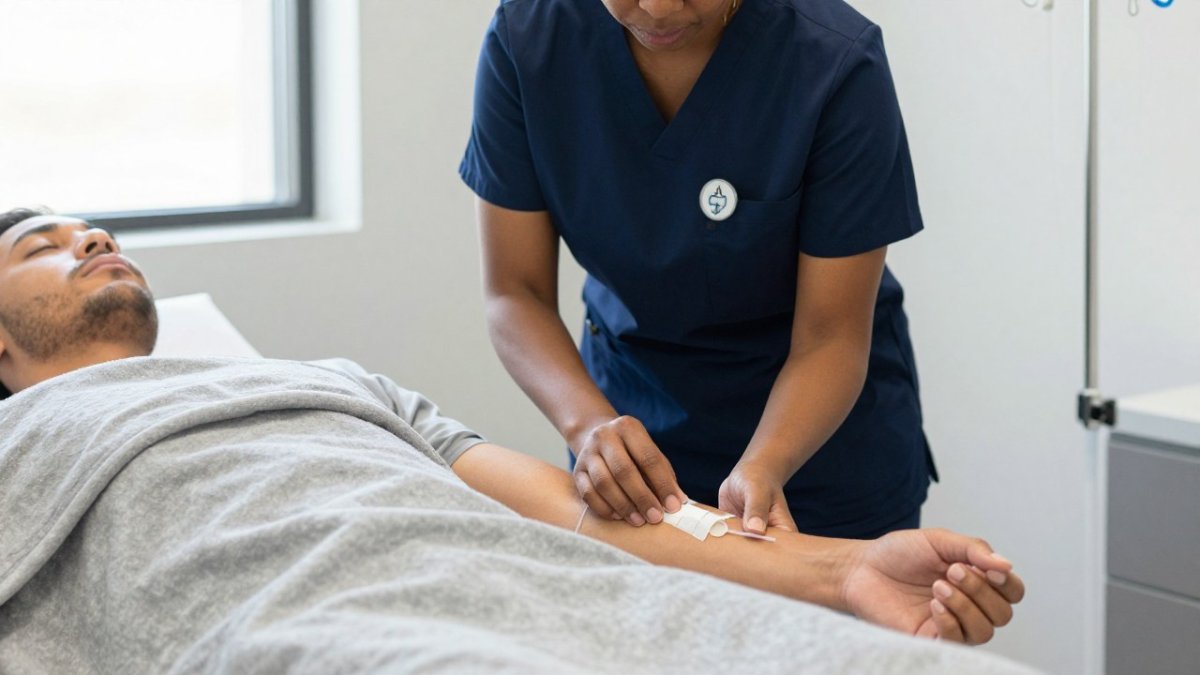
Ask your clinic for a realistic visit window when you book, since some infusions take longer than others. First-timers curious about the experience can explore which IV options suit their energy goals.
Here is the typical sequence of a first infusion visit, with the time each step usually takes.
| Step | What happens | Time |
|---|---|---|
| Arrival and check-in | Show photo ID and insurance card, sign consent forms | 10 minutes |
| Health review | Nurse or provider asks about medications, supplements, allergies | 10-15 minutes |
| Vitals check | Blood pressure, heart rate, sometimes temperature | 5 minutes |
| IV placement | Nurse finds a vein, cleans the site, inserts a small catheter | 5 minutes |
| Infusion | You sit in a recliner while the bag empties | 30-60 minutes |
| Observation and discharge | Nurse removes the catheter and confirms you feel well | 10 minutes |
Time
What Not to Do Before IV Therapy
A common mistake is arriving on an empty stomach when there was no medical reason to fast. Unless your care team gave you specific fasting instructions, eat something light beforehand.
Here is what to skip:
- Do not fast without instructions. Low blood sugar plus a needle can leave you dizzy.
- Do not drink alcohol the night before. It adds dehydration on top of dehydration.
- Do not load up on caffeine right before. It can raise your heart rate and make the vitals check confusing.
- Do not skip your regular prescriptions. Unless a clinician told you to hold a dose, take your medications as usual.
- Do not apply heavy lotions or oils to both arms. They make vein access and tape adhesion harder.
- Do not schedule a hard workout right before. Arrive rested, not depleted.
One more thing: tell your care team about all supplements. Herbal products and high-dose vitamins can interact with what goes in the bag, and they should be listed on the intake form even if they feel harmless.
What to Eat Before IV Therapy
A light meal or snack one to two hours before your visit is the sweet spot for most people. You want steady blood sugar without a heavy, sluggish feeling. But the most important preparation step is confirming whether that general advice even applies to you.
Follow your care team’s specific instructions first. If you are receiving prescribed infusion therapy for a diagnosed condition, you may be told to fast, limit fluids, or hold certain medications. Those instructions override everything in this guide.
If no restrictions apply, good options include:
- Toast with peanut butter
- A banana and a handful of crackers
- Greek yogurt with fruit
- A small sandwich
- Broth or a light soup
Skip greasy, heavy meals right before. They can leave you queasy in a recliner, and nausea makes an already unfamiliar experience worse.
Hydration matters just as much. Drink water in the hours before your appointment so your veins are easier to find. Well-hydrated veins plump up and are simpler to access, which means fewer sticks.
Watch out: if your provider has given you fluid limits for a medical reason, such as heart or kidney conditions, follow those instructions instead of generic hydration advice. Drinking extra water when you have been told to restrict fluids can be dangerous.
What to Bring to an IV Therapy Appointment
Pack light but pack smart. A little planning makes the hour in the chair far more comfortable, and the right information makes it safer. (Source: guidelines for the safe administration of intravenous therapies)
Health information that changes your care:
- Photo ID and insurance card
- A written list of medications, vitamins, and supplements with doses, including anything you take occasionally
- Allergy information, including prior reactions to medications, adhesives, or latex
- Any recent blood work or medical records your provider requested
- A note of your primary care provider’s name and contact information, in case the clinic needs to coordinate
Comfort and logistics:
- A light snack and a water bottle, unless you have been told to fast or limit fluids
- A phone charger or power bank
- Headphones, a book, or a tablet
- A sweater or light jacket, since clinics run cool
- A list of questions for your care team
Plan for the ride home. If your treatment or medication can make you drowsy, dizzy, or less alert, arrange for someone to drive you. Ask when you book whether you will be safe to drive yourself afterward.
Watch out: leaving supplements off your intake form because they feel harmless is a common mistake.
If you want a broader picture of what a visit involves before you go, our overview of wellness clinic services covers the range of care and how appointments typically flow.
How Long Does IV Therapy Take
Most IV therapy sessions take 30 to 60 minutes of drip time, plus about 30 minutes for check-in, intake, and IV placement. Plan on roughly 60 to 90 minutes total for a standard visit.
Several things shift that window:
- The formula. A simple hydration bag moves faster than a larger nutrient blend.
- Your vein access. Hard-to-find veins add a few minutes.
- Clinic pace. A busy afternoon means a longer wait before you start.
- Observation time. Some clinics monitor you briefly after the drip ends.
If you are weighing the time commitment against the cost, our breakdown of IV therapy cost per session explains what drives pricing without the sales pitch. Ask about total visit length when you book so you can plan your day.
Clarifying Prescribed Infusion Therapy vs. Elective Wellness IV Services
These are two different things, and the preparation advice is not always the same.
Prescribed infusion therapy is ordered by a clinician to treat a diagnosed condition. It may involve specific fasting rules, fluid limits, or medication holds. Follow your care team’s instructions exactly, even if they contradict general advice in a guide like this one.
Elective wellness IV services are chosen by you for hydration, nutrient support, or recovery. These usually need no fasting and no special prep beyond eating light and drinking water.
If you are unsure which category your appointment falls into, ask when you book. It changes what you should do the morning of your visit. For a closer look at what elective nutrient IVs are used for, read about the benefits of IV vitamin therapy.
When to Reschedule or Call Your Care Team
Call and reschedule if you have a fever, an active infection, vomiting, or diarrhea. Your body is already under strain, and an IV appointment is not the day to push through.
Reach out to your care team before your visit if:
- You started a new medication since booking
- You are pregnant or think you might be
- You had a reaction to an IV, medication, or adhesive before
- You have a flare-up of a chronic condition
- You are unsure whether to take a medication the morning of your visit
Accessibility and logistics deserve a call too. If you need a support person with you, use a wheelchair, or need help with transportation home, tell the clinic ahead of time. Most clinics can accommodate these needs with notice.
During or after treatment, seek urgent care for trouble breathing, chest pain, swelling at the IV site, or a spreading rash. Those are not wait-and-see symptoms.
Book Your IV Therapy Appointment at enrG Wellness
Preparing well removes much of the guesswork. enrG Wellness in Foley, Alabama offers personalized care and tailored wellness plans aimed at supporting energy, recovery, and long-term vitality. You can confirm our location and service area before you book.
Ready to feel the difference a well-run appointment makes? Get started with enrG Wellness and arrive confident, hydrated, and prepared.
The gap between a stressful first visit and an easy one usually comes down to preparation. If you want a care team that walks you through every step, from intake to aftercare, enrG Wellness is ready when you are. Our personalized, results-driven approach, supportive clinical team, and calm, elevated environment are built to help you restore balance and feel your best. Book an appointment today and let us handle the details while you focus on feeling stronger.
Frequently Asked Questions
Should I eat or drink before IV therapy?
In most cases, yes. Eating a light meal or snack within a couple of hours before your appointment helps keep your blood sugar steady and can reduce dizziness or nausea during the infusion. Drink water normally so you arrive hydrated, which makes IV access easier. If your healthcare provider has given you fasting or fluid-limit instructions for a prescribed treatment, follow those instead and ask the care team to clarify anything you are unsure about.
What should I not do before IV therapy?
Skip alcohol and heavy, greasy meals in the hours before your appointment, and avoid arriving dehydrated or on an empty stomach unless you have been told otherwise. Do not take new supplements or over-the-counter medications without checking with your care team, and do not skip prescription medications unless your provider says to. Also avoid scheduling intense exercise right before treatment and leave enough time to arrive without rushing.
Can I use the bathroom during an IV infusion?
Yes. Most infusion chairs are on wheels or have a nearby restroom, and your nurse can pause or accompany you so the line stays secure. Use the restroom before your session starts to reduce interruptions, and tell your care team if you expect to need extra trips. Staying hydrated before your appointment helps with IV access but may mean more bathroom breaks, so wear clothing that is easy to manage.
How long does IV therapy take from check-in to finish?
Plan for more time than the drip itself. Check-in and vitals often take 10 to 15 minutes, and the infusion itself can run from about 30 minutes to two hours depending on the formula and your treatment plan. Add a short monitoring period afterward. Ask your care team when you book so you can plan your day, and bring something to do in case your session runs longer than expected.
