

Foods to Avoid Before Bedtime for Better Sleep
Last Updated: November 21, 2026
Quick Summary
The main foods to avoid before bedtime are caffeine and hidden caffeine sources like dark chocolate, alcohol, spicy and acidic foods, high-fat heavy meals, and sugary foods and drinks. Finish eating about two to three hours before bed, and if you are hungry, choose a small, light snack instead of a large meal.
- Caffeine blocks adenosine and its effects can linger for hours after your last cup.
- Alcohol shortens sleep onset but fragments sleep in the second half of the night.
- Fat slows gastric emptying, so a high-fat meal can sit in the stomach for hours.
- Keep the heaviest meal of the day at least three hours before bed.
- People with reflux often do better with three hours between dinner and bed.
Table of Contents
- Why Late-Night Eating Disrupts Sleep Quality
- Foods to Avoid Before Bedtime: Caffeine and Hidden Sources
- Alcohol and Its Effects on Sleep Cycles
- Spicy Foods and Acid Reflux Triggers
- High-Fat Foods and Heavy Meals
- Sugary Foods and Drinks to Avoid Before Bed
- How Long Before Bed Should You Stop Eating?
- What to Eat Before Bed If Hungry: Better Choices
- Frequently Asked Questions
Why Late-Night Eating Disrupts Sleep Quality
What you eat close to bedtime can shape how quickly you fall asleep and how rested you feel the next morning. That makes foods to avoid before bedtime a practical place to start when sleep problems keep showing up. (Source: National Institutes of Health)
Late-night eating can disrupt sleep quality because digestion, blood sugar, and stimulants all compete with the body’s wind-down process. Many people find that heavy or stimulating foods close to bedtime lead to more nighttime awakenings and lighter rest.
Poor sleep can feed daytime exhaustion, and that exhaustion may drive more late-night snacking. It can become a loop.
Stress is only one factor in sleep, and dinner timing and evening snacks can also play a role.
If brain fog is already part of your picture, our guide on how to clear brain fog pairs well with cleaning up your evening eating habits. And if ongoing sleep problems have you worried about deeper fatigue, it helps to understand the long-term effects of chronic fatigue before they compound.
Foods to Avoid Before Bedtime: Caffeine and Hidden Sources
Caffeine is the most reliable sleep disruptor on this list. It blocks adenosine, the chemical that builds sleep pressure through the day, and its effects can linger for hours after your last cup.
Most people know to skip coffee at night. Far fewer realize where else caffeine hides:
- Dark chocolate and cocoa (a single square can carry a meaningful dose)
- Some teas, including black, green, and matcha
- Sodas and energy drinks
- Coffee-flavored desserts and ice cream
- Certain supplements and pre-workout powders
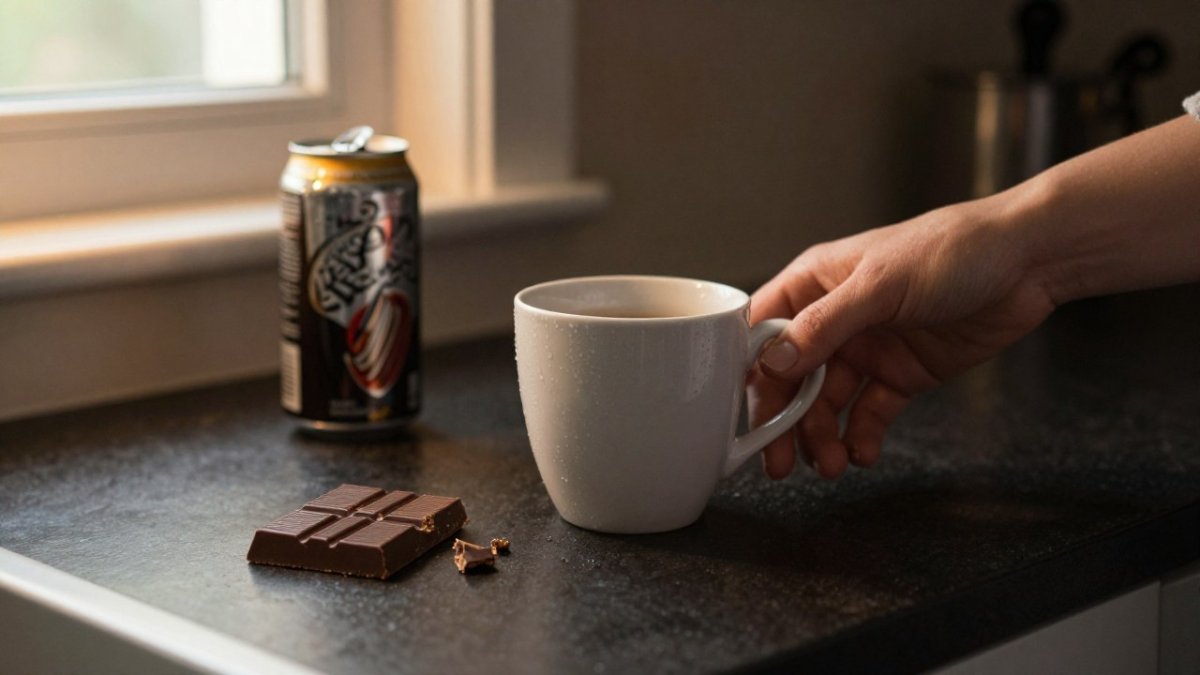
Chocolate and Caffeinated Foods
Chocolate is a double problem. It contains caffeine and a related stimulant called theobromine, and many bars add sugar on top. A small square after dinner is rarely the issue. A full candy bar at 10 p.m. often is.
The tricky part is that caffeine sensitivity varies widely. Some people clear it quickly. Others feel a single afternoon coffee at midnight.
Watch out: if you drink “decaf” tea or coffee late in the day, check the label. Decaf still contains small amounts of caffeine, and several cups add up.
Alcohol and Its Effects on Sleep Cycles
Alcohol is the most misunderstood item on this list. It makes people feel drowsy, so it seems helpful. In reality, it fragments sleep in the second half of the night.
A drink before bed can shorten sleep onset, then trigger nighttime awakenings as the body metabolizes it. Many people wake at 3 a.m. after an evening of drinking and cannot explain why.
Drinks to avoid before bed include:
- Cocktails and wine close to bedtime
- Nightcaps used as a sleep aid
- High-sugar mixed drinks, which add a blood sugar spike on top of the alcohol
If you do drink late, hydration matters. Our article on recovering from a hangover with IV fluids covers what actually helps the next morning.
Spicy Foods and Acid Reflux Triggers
Spicy foods can disrupt sleep in two ways. Capsaicin, the compound that makes chili peppers hot, can raise body temperature and cause discomfort. Spicy meals also commonly trigger acid reflux and heartburn when you lie down soon after eating.
The effect is dose-dependent. A little hot sauce at lunch is fine for most people. A heavy spicy dinner an hour before bed is a different story.
Citrus Fruits and Acidic Foods
Acidic foods round out the reflux category. Common culprits include:
- Citrus fruits and juices
- Tomato sauce and salsa
- Vinegar-heavy dressings
- Carbonated drinks
If you already deal with heartburn, these are worth moving earlier in the day. Individual tolerance varies, so track your own pattern rather than cutting everything at once.
High-Fat Foods and Heavy Meals
Fatty meals take longer to digest, and digestion slows further when you sleep. A burger, fried food, or a creamy pasta dish at 9 p.m. keeps the stomach working when it should be resting. The result is often a restless first half of the night. Some people notice bloating or reflux. Others just wake feeling unrefreshed.
The mechanism is straightforward: fat slows gastric emptying, so a high-fat meal can sit in the stomach for hours. When you lie down, that slower digestion stacks on top of reflux risk and can make the first half of the night lighter and more fragmented. The effect may be driven more by meal size and timing than by any single food.
Portion size matters as much as food choice here. A small serving of a rich food is usually fine. A large heavy meal is the real problem. As a practical rule, keep the heaviest meal of the day at least three hours before bed, and if you eat later, keep the portion to roughly the size of your palm of protein plus a fist of vegetables rather than a full plate.
Common high-fat culprits to move earlier in the day include:
- Fried foods and fast food
- Creamy sauces and cheese-heavy dishes
- Fatty cuts of meat and processed meats
- Butter-heavy baked goods and pastries
- Large portions of nuts or nut butter close to bedtime
Watch out: a small handful of nuts is a reasonable evening snack, but a large bowl can deliver enough fat and volume to slow digestion and trigger reflux in people who are sensitive.
Individual tolerance varies. People with reflux or a sensitive stomach often do better with three hours between dinner and bed, while people who get hungry easily may do better with a small, light snack closer to bedtime than a large meal. Track your own pattern for a week rather than cutting all fat at once.
Sugary Foods and Drinks to Avoid Before Bed
Sugar causes a blood sugar spike followed by a crash. That crash can wake you in the middle of the night, sometimes with hunger or a racing feeling. Refined carbohydrates act much like sugar. White bread, pastries, and cereal eaten late can produce the same spike-and-crash pattern.
The evidence here is mixed rather than settled. Some people clearly notice lighter sleep and nighttime awakenings after a sugary snack, while others see no difference. A common pattern is that the effect depends on the amount, how close to bedtime you eat, and whether you are prone to blood sugar swings. Treat this as a likely trigger to test rather than a proven disruptor for everyone.
Hidden sugar sources catch people off guard:
- Flavored yogurt and sweetened oatmeal
- Granola and protein bars
- Fruit juice and sweetened tea
- Sauces and dressings
- Coffee-shop drinks with syrups
- Dried fruit and trail mix
Artificial sweeteners are less clear-cut. Some people report digestive upset or lighter sleep. If you notice a pattern, try cutting them for a week and see.
If you are hungry before bed, pair a small carbohydrate with protein or fat to blunt the spike, for example, a banana with a spoon of peanut butter, or plain Greek yogurt with a few berries. Keep the portion small so digestion stays easy. If you have diabetes or take medication that affects blood sugar, talk with your clinician before making changes to evening eating, since dietary changes alone may not be enough.
How Long Before Bed Should You Stop Eating?
A common approach is to finish eating about two to three hours before bed. That window gives digestion time to settle and reduces reflux risk when you lie down.
The right timing depends on your body. People with reflux often do better with three hours. People who get hungry easily may do better with a small, light snack closer to bedtime than a large meal.
For more wellness guidance on sleep, nutrition, and recovery, browse the enrG Wellness blog.
The article gives a general timing window along with adjustments for different bodies.
| Item | Value | Note |
|---|---|---|
| General cutoff | Two to three hours before bed | Gives digestion time to settle |
| People with reflux | Three hours | Reduces reflux risk when lying down |
| People who get hungry easily | Small, light snack closer to bedtime | Better than a large meal |
| Heaviest meal of the day | At least three hours before bed | Practical rule from the high-fat section |
What to Eat Before Bed If Hungry: Better Choices
Going to bed hungry backfires. Hunger itself disrupts sleep, so the goal is choosing foods that calm the body rather than stimulate it.
Better options when you are hungry before bed include:
- A small handful of almonds or walnuts for protein and healthy fat
- Plain Greek yogurt for protein and calcium
- A banana for potassium and natural carbs
- A slice of turkey for tryptophan
- Warm milk or herbal tea for a calming routine
- A small bowl of oatmeal for steady blood sugar
Some people find that protein and tryptophan-rich foods are easier to settle with before sleep. Keep portions small so digestion stays easy. If you track your food intake, our guide on tracking macros without food anxiety can help you do it without stress.
Getting your evening eating right is one piece of a bigger picture. If fatigue, brain fog, or poor sleep keep coming back no matter what you change, the root cause may sit deeper than your dinner plate. enrG Wellness offers personalized wellness plans that look for root causes rather than temporary fixes. Book an appointment today to talk through your options.
Frequently Asked Questions
What foods should you avoid before bed?
The main foods to avoid before bedtime include caffeine sources like coffee, tea, and chocolate; alcohol; spicy foods; high-fat or heavy meals; sugary snacks and drinks; and acidic foods like citrus and tomatoes. These can disrupt sleep quality by increasing sleep latency, causing nighttime awakenings, or triggering acid reflux. Timing matters too: aim to finish eating 2-3 hours before bed and keep portions small if you need a snack.
How long before bed should you stop eating?
Most sleep experts suggest stopping eating 2-3 hours before bedtime to allow digestion and reduce the risk of acid reflux and sleep disruption. However, individual differences matter. If you have a sensitive stomach or acid reflux, you may need a longer window. If you’re hungry, a small, easily digestible snack like a banana or a few almonds is fine. Pay attention to how your body responds and adjust timing accordingly.
Can spicy food affect your sleep?
Yes, spicy foods can affect sleep by raising body temperature and triggering acid reflux or heartburn, especially if eaten close to bedtime. The compound capsaicin may also interfere with thermoregulation, making it harder to fall asleep. If you enjoy spicy food, try to eat it earlier in the day and keep portions moderate. Notice whether you experience heartburn or nighttime awakenings after spicy meals and adjust accordingly.
Does eating sugar before bed keep you awake?
Sugar before bed can disrupt sleep by causing blood sugar spikes and crashes, which may lead to nighttime awakenings and restless sleep. Refined carbohydrates and sugary snacks digest quickly, potentially triggering a surge in energy followed by a crash that interrupts sleep cycles. Opt for a small snack combining protein and fiber, like apple slices with almond butter, if you’re hungry before bed.
