
Non-Invasive Skin Rejuvenation Treatments: A 2026 Guide
Table of Contents
- What Non-Invasive Skin Rejuvenation Treatments Can Do
- Laser Skin Rejuvenation and Light-Based Therapies
- Microneedling for Skin Rejuvenation and Collagen Induction
- Non-Invasive Skin Tightening Treatments Using Radiofrequency and Ultrasound
- Skin Resurfacing Treatments: Chemical Peels and Microdermabrasion
- Realistic Timelines, Results, and What to Expect
- Choosing the Right Treatment for Your Skin Type and Concerns
- Safety, Side Effects, and Finding a Qualified Provider
- Frequently Asked Questions
Last Updated: October 5, 2026
What Non-Invasive Skin Rejuvenation Treatments Can Do
Non-invasive skin rejuvenation refers to cosmetic procedures that improve skin texture, tone, and firmness without surgical incisions or general anesthesia.
Options include laser therapy, radiofrequency, ultrasound, microneedling, and chemical peels. Each works through a different mechanism, targets different concerns, and delivers results on a different timeline.
At enrG Wellness, our clinical team combines modern wellness solutions with personalized care to address root causes and support your long-term vitality.
Laser Skin Rejuvenation and Light-Based Therapies
Laser and light-based treatments remain among the most effective non-invasive skin rejuvenation options. These devices emit focused energy that penetrates skin layers, stimulating collagen remodeling and removing damaged cells, improving fine lines, texture, and overall skin quality.
Two categories exist: ablative and non-ablative lasers. Ablative lasers remove the outer skin layer, creating controlled injury that triggers intense healing and collagen production. Non-ablative lasers leave the surface intact while heating deeper layers. The choice determines recovery time, results, and candidacy.
Ablative vs. Non-Ablative Laser Treatments
Ablative laser skin rejuvenation delivers faster, more dramatic results but requires significant downtime. The laser vaporizes the epidermis and upper dermis, removing age spots, scars, and fine lines while triggering strong collagen synthesis.
Non-ablative laser skin rejuvenation heats the dermis without removing surface skin, so redness fades within hours to a day.
Light therapy, including intense pulsed light (IPL), occupies a middle ground. IPL uses broad-spectrum light rather than a single wavelength, making it less precise but gentler.
Microneedling for Skin Rejuvenation and Collagen Induction
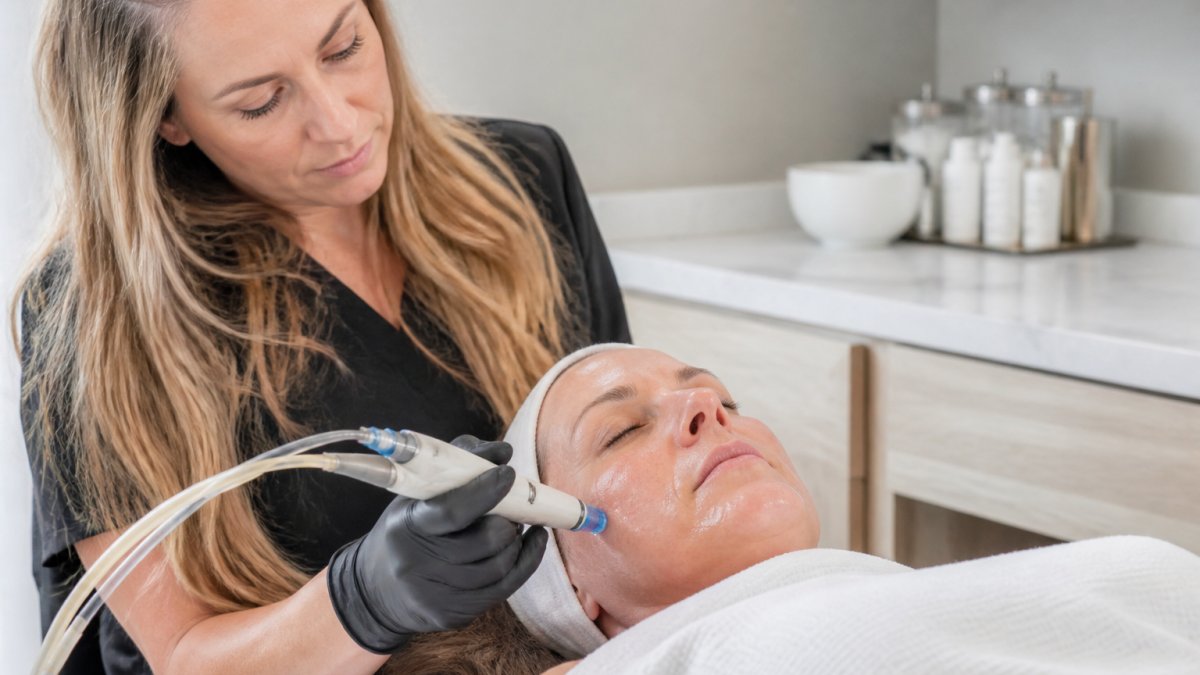
Microneedling creates thousands of tiny punctures with fine needles, triggering the body’s healing response and collagen production. It works on all skin tones, requires minimal downtime, and delivers visible results.
The needles reach the dermis, deep enough to stimulate collagen without lasting injury.
A session takes 30-45 minutes, with mild redness and swelling resolving in 24-48 hours.
RF microneedling combines radiofrequency energy with needling, intensifying collagen stimulation and delivering faster results in fewer sessions than traditional microneedling alone.
Non-Invasive Skin Tightening Treatments Using Radiofrequency and Ultrasound
Radiofrequency and ultrasound treatments tighten skin by heating the dermis and triggering collagen contraction and remodeling, addressing age- and sun-related skin laxity without incisions.
Radiofrequency devices emit electromagnetic waves that heat the dermis, causing immediate collagen contraction and long-term synthesis.
Microfocused ultrasound delivers sound waves to precise depths, heating targeted tissue and prompting collagen remodeling.
Both require no downtime, mild redness may appear temporarily, but most people resume normal activities immediately.
Skin Resurfacing Treatments: Chemical Peels and Microdermabrasion
Chemical peels use acids to dissolve the outer layers of skin, removing damaged cells and stimulating collagen.
Microdermabrasion uses a handheld device with fine crystals or a diamond-tipped wand to physically exfoliate the skin, improving texture and mild discoloration.
Both work best for superficial concerns; for deeper wrinkles and significant sun damage, laser or radiofrequency treatments typically deliver better results.
Realistic Timelines, Results, and What to Expect
Most roundups describe results as “gradual” and “natural-looking” without explaining what that means week by week. This section maps each major modality to a realistic onset window, session count, and durability range.
Treatment-by-Treatment Timeline
| Treatment | Typical sessions | Spacing | First visible change | Full results | Durability |
|---|---|---|---|---|---|
| Superficial chemical peel | 4-6 | 2-4 weeks | 3-7 days | 4-6 weeks | 4-8 weeks per cycle |
| Medium-depth peel (e.g., TCA) | 1-2 | 4-6 weeks | 7-10 days | 6-8 weeks | 3-6 months |
| Microdermabrasion | 6-10 | 2-3 weeks | Immediately after each session | Cumulative over the series | Weeks to a few months |
| Microneedling | 3-4 | 4-6 weeks | 2-4 weeks | 3-6 months | 12-18 months |
| RF microneedling | 2-3 | 4-6 weeks | 3-4 weeks | 3-6 months | 12-18 months |
| Non-ablative laser | 4-6 | 4-6 weeks | 2-4 weeks | 3-6 months | 6-12 months |
| Ablative laser | 1 | , | 1-2 weeks (as peeling resolves) | 3-6 months | 5-10 years with sun protection |
| IPL / light-based | 3-5 | 3-4 weeks | 1-2 weeks | 6-12 weeks | 6-12 months |
| Radiofrequency tightening | 4-6 | 2-4 weeks | 4-6 weeks | 2-3 months | 1-2 years |
| Microfocused ultrasound | 1-2 | 3-6 months apart | 2-3 months | 3-6 months | 1-2 years |
These ranges reflect common clinical patterns, not guarantees. Individual results shift based on age, skin condition, sun history, smoking status, and at-home care consistency.
Why Collagen Remodeling Sets the Pace
Nearly every modality here triggers controlled injury in the dermis, prompting fibroblasts to lay down new collagen and elastin. New collagen takes roughly 8-12 weeks to mature into visible firmness, which is why a single microneedling session rarely looks dramatic at week two but often looks noticeably better at month three.
Energy-based treatments add a faster effect: immediate collagen contraction from heat. Radiofrequency and ultrasound produce some tightening within days, then a slower wave of new collagen over following months, hence the “subtle at first, better later” reputation.
Sessions, Maintenance, and the Honest Limits
- Fewer sessions, bigger commitment: Ablative laser and deep peels can deliver meaningful change in one visit, but the recovery window is real and the risk profile is higher.
- More sessions, gentler curve: Non-ablative lasers, microneedling, and RF typically need 3-6 visits to reach their ceiling, but each visit carries minimal downtime.
- Maintenance is not optional: Even the longest-lasting options, ablative laser and microfocused ultrasound, benefit from annual or biennial touch-ups. Microneedling and RF results commonly fade within 12-18 months without maintenance.
- Aging continues: No non-invasive treatment stops chronological or photoaging. The realistic goal is looking refreshed relative to your baseline, not freezing your appearance at a fixed date.
Ask your provider to photograph you under the same lighting and angle before treatment and at each follow-up. Collagen changes are gradual enough that patients often underestimate their own improvement without a side-by-side comparison.
If a provider promises “permanent” results from a single non-invasive session, treat that as a red flag. No energy-based or needling modality reverses aging permanently, and any clinic that claims otherwise is either misinformed or overselling.
Setting Expectations Before You Book
A useful rule of thumb: the more dramatic the promised result, the more downtime, sessions, or risk it usually carries. “Lunchtime” procedures deliver lunchtime-sized changes; treatments requiring a week of recovery deliver proportionally larger ones. Matching treatment intensity to your concern, not a marketing promise, best predicts satisfaction.
Choosing the Right Treatment for Your Skin Type and Concerns
Selecting the right treatment depends on your skin concern, skin type, downtime tolerance, and budget.
For fine lines and mild wrinkles, non-ablative lasers or radiofrequency work well. For deeper wrinkles and significant sun damage, ablative lasers or stronger peels deliver faster results.
Skin tone matters.
Downtime tolerance shapes decisions too: flexible schedules allow aggressive ablative treatments, while those who can’t afford downtime benefit from non-ablative or radiofrequency options.
Safety, Side Effects, and Finding a Qualified Provider
Most articles mention “mild redness and swelling” and move on, not enough to make a safe decision. This section breaks down which side effects are expected, which are warning signs, and which patients should pause.
Expected vs. Concerning Side Effects
Expected and temporary:
- Redness lasting hours to a few days, depending on intensity
- Mild swelling, especially around the eyes and cheeks after laser or RF
- Warmth, tingling, or a sunburn-like sensation during and after treatment
- Flaking or peeling 3-7 days after resurfacing treatments
- Small pinpoint scabs after microneedling or fractional laser
Concerning, call your provider:
- Blistering, crusting, or open wounds that do not heal within a week
- Spreading redness, warmth, or pus suggesting infection
- New or worsening dark patches (post-inflammatory hyperpigmentation)
- Prolonged numbness, muscle weakness, or asymmetry after injectables
- Fever or chills following any procedure
Contraindications by Modality
| Modality | Key contraindications and cautions |
|---|---|
| Ablative laser | Active acne, isotretinoin use within the past 6-12 months, recent sun exposure, history of keloids, darker skin tones without provider experience |
| Non-ablative laser | Active infection, pregnancy (varies by device), photosensitizing medications |
| IPL / light-based | Recent tan, photosensitizing drugs, certain seizure medications, active cold sores in the treatment area |
| Microneedling | Active acne or eczema in the area, blood thinners, immunosuppression, history of poor wound healing |
| RF microneedling | Same as microneedling, plus implanted electronic devices near the treatment area |
| Radiofrequency | Pregnancy, metal implants in the treatment zone, pacemakers |
| Microfocused ultrasound | Open wounds, severe laxity better suited to surgery, implanted devices in the path |
| Chemical peels | Pregnancy (varies by acid), recent isotretinoin, active herpes, compromised skin barrier |
| Injectables | Pregnancy, active infection, allergy to filler components, autoimmune conditions (case-by-case) |
This table is a starting point, not a substitute for clinical evaluation. A qualified provider will review your medication list, medical history, and prior treatments before recommending anything.
Medications and Skin That Change the Risk Calculus
A few categories deserve special attention:
- Isotretinoin (Accutane): Many providers ask patients to wait 6-12 months after stopping before resurfacing treatments because of impaired wound healing and scarring risk.
- Blood thinners and anticoagulants: Increase bruising and bleeding risk with microneedling and injectables.
- Photosensitizing medications: Certain antibiotics, diuretics, and acne medications raise the risk of burns from laser and IPL.
- Immunosuppressants: Can slow healing and increase infection risk after any treatment that breaks the skin barrier.
- Recent sun exposure or tanning: Raises the risk of hyperpigmentation and burns; most providers ask patients to avoid sun for 1-2 weeks before and after treatment.
Skin Tone and Pigment Risk
Darker skin tones (Fitzpatrick IV-VI) carry a higher risk of post-inflammatory hyperpigmentation and, rarely, hypopigmentation after laser and peel treatments. That doesn’t make these treatments off-limits, it means device selection, energy settings, and provider experience matter more. Nd:YAG lasers, certain fractional devices, and microneedling tend to be safer starting points.
If a provider does not ask about your skin tone, medication list, or prior treatments before recommending a device, that is a signal to get a second opinion. Safe treatment selection starts with a real consultation, not a package deal.
How to Vet a Provider
Credentials and experience matter more than device brand. Ask:
- What are your credentials? Board certification in dermatology, plastic surgery, or a related specialty is a strong baseline. For injectables and lasers, also ask about specific training hours and continuing education.
- How many of these treatments do you perform per month? Volume matters, complication rates drop with experience.
- How many patients with my skin tone have you treated? This is especially important for darker skin tones and for patients with melasma.
- What is your complication rate, and how do you handle them? A confident provider will answer directly.
- Can I see before-and-after photos of patients with my concern and skin type? Generic stock photos are not a substitute.
- Who supervises the treatment? In medical spas, a supervising physician should be actively involved, not just a name on a license.
- What is the emergency plan if something goes wrong? Access to medical care and a clear protocol are non-negotiable.
Setting Matters
Treatments in a medical office with physician oversight differ from spas or unregulated settings: medical-grade devices with documented maintenance, sterilization protocols, the ability to prescribe antivirals or antibiotics, and access to emergency care. These safeguards turn a routine procedure into a safe one.
At enrG Wellness, our clinical team screens every patient for contraindications, reviews medications and skin history in detail, and matches treatment intensity to your skin type and goals.
Frequently Asked Questions
What is the most effective non-invasive skin rejuvenation treatment?
Effectiveness depends on your specific skin concerns and skin type. Laser skin rejuvenation works well for sun damage and texture; radiofrequency and ultrasound excel at skin tightening; microneedling stimulates collagen production for fine lines and scarring; chemical peels address discoloration and surface texture. A qualified provider will assess your skin and recommend the best option or combination of treatments for your goals.
How many sessions of non-invasive skin rejuvenation treatments do you typically need?
Most non-invasive treatments require multiple sessions spaced weeks apart. Laser skin resurfacing typically needs 3-6 sessions; radiofrequency and ultrasound treatments often require 4-6 sessions; microneedling usually requires 3-4 sessions for visible results; chemical peels may need 4-6 sessions depending on strength. Your provider will create a treatment plan based on your skin condition and desired outcome.
What are the risks and side effects of non-invasive skin rejuvenation?
Side effects vary by treatment. Common temporary effects include redness, swelling, and mild discomfort. Laser treatments carry risks of burns or pigmentation changes, especially on darker skin tones. Microneedling may cause bruising and infection if not done in a sterile setting. Chemical peels can cause irritation or sensitivity. Choosing an experienced, qualified provider significantly reduces risks and ensures treatments are appropriate for your skin type.
How long do results from non-invasive skin rejuvenation treatments last?
Results vary by treatment type and individual factors. Laser skin resurfacing results can last 1-3 years; radiofrequency and ultrasound effects typically last 6-12 months; microneedling benefits continue improving for several months and may last 6-12 months; chemical peels require periodic maintenance. Maintenance treatments and a strong skincare routine help extend results. Your provider will discuss expected duration during your consultation.