

Mind Performance Center Alternatives: 2026 Guide
Table of Contents
- What to Look for in a Mind Performance Center Alternative
- Understanding Brain Health Assessments and Diagnostics
- Functional Health Clinic Services vs. Specialized Brain Centers
- At-Home Neurofeedback and Brain Training Platforms
- Benefits of IV Therapy for Performance and Recovery
- Root Cause Health Analysis: Clinical vs. Holistic Approaches
- Comparison Table: Mind Performance Center Alternatives
- How to Choose the Right Mind Performance Center Alternative
- Frequently Asked Questions
Last Updated: September 27, 2026
What to Look for in a Mind Performance Center Alternative
When searching for a mind performance center alternative, you want a comprehensive approach that addresses root causes of cognitive decline, fatigue, or performance plateaus, combining clinical assessment, personalized protocols, and ongoing monitoring. (Source: quantitative EEG (qEEG) brain mapping)
A strong mind performance center alternative requires qualified clinical oversight, validated diagnostic tools like brain mapping, flexibility to adapt as needs evolve, and integration of multiple modalities rather than single interventions.
At enrG Wellness, we’ve built our practice around these principles. Rather than forcing every client into the same protocol, we assess each person’s unique metabolic, neurological, and functional status, then design a targeted plan. This root-cause approach is what separates effective alternatives from expensive gimmicks.
Before committing to any alternative, ask whether the provider can explain WHY they’re recommending specific interventions. The best centers connect their recommendations to your actual diagnostic findings, not a one-size-fits-all menu.
Understanding Brain Health Assessments and Diagnostics
Brain health assessments form the foundation of any credible mind performance center alternative, measuring neurological function, metabolic markers, and brainwave patterns beyond standard cognitive testing.
Quantitative EEG (QEEG) brain mapping measures electrical activity across brain regions and compares your patterns to a normative database, revealing whether cognitive struggles stem from overactivity, underactivity, or dysregulation between areas.
Neurofeedback uses real-time visual or auditory feedback to teach your brain to self-regulate toward healthier brainwave patterns identified by QEEG, with your brain learning to maintain these patterns over time.
Functional health assessment is equally important, as many cognitive issues trace to metabolic dysfunction, nutritional deficiencies, or systemic inflammation. A comprehensive alternative assesses glucose metabolism, thyroid function, inflammatory cytokines, and micronutrient status.
The diagnostic difference matters: centers that use QEEG and functional assessment catch problems that standard neurology misses, because they’re looking for optimization, not just disease.
Functional Health Clinic Services vs. Specialized Brain Centers
Functional health clinics and specialized brain centers approach mind performance differently, and understanding that distinction helps you choose the right fit.
Specialized brain centers focus narrowly on neurological optimization through interventions like TMS or neurofeedback, offering expert-level care for primary neurological issues. Their limitation is scope, they may not address metabolic, hormonal, or inflammatory factors driving brain dysfunction.
Functional health clinics take a broader systems approach, assessing sleep quality, gut health, immune function, hormonal balance, and metabolic status alongside brain-specific measures, with teams including nurse practitioners, functional medicine doctors, and health coaches.
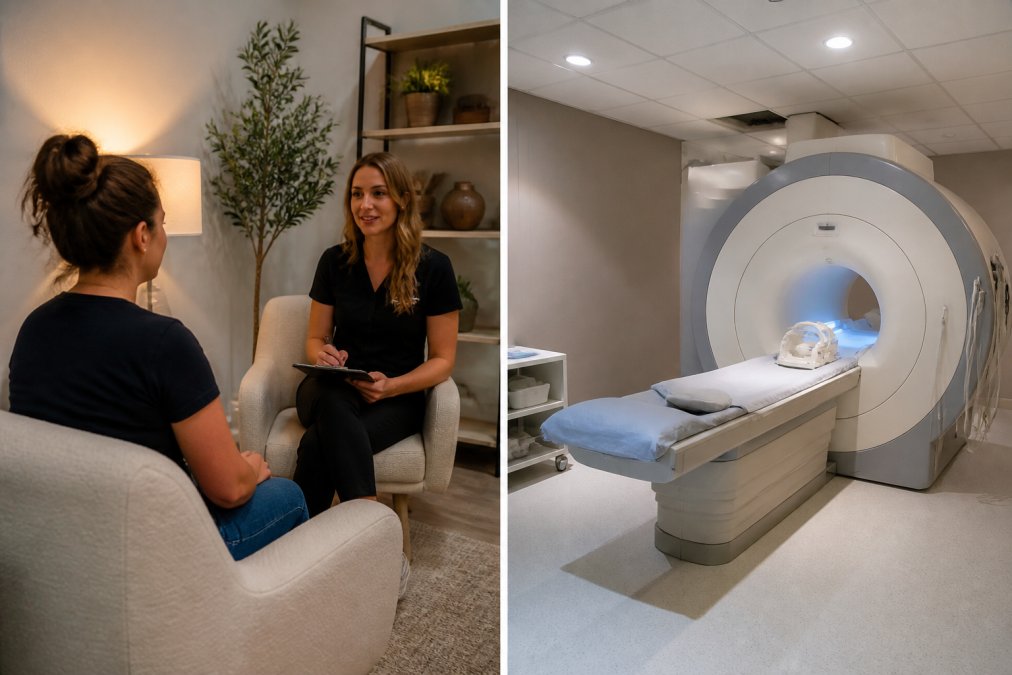
A specialized brain center offers sophisticated neurological interventions, but a functional health clinic often identifies and treats upstream factors causing the problem, delivering faster, more durable results by addressing causation rather than symptoms.
enrG Wellness operates as a functional health clinic. We assess neurological function, but we also evaluate your metabolic status, recovery capacity, energy production, and systemic inflammation. This integrated view means we often find that cognitive improvement follows metabolic restoration. A client whose brain fog stems partly from poor sleep, dysregulated blood sugar, and chronic inflammation sees better results from addressing all three factors than from brain training alone.
At-Home Neurofeedback and Brain Training Platforms
At-home neurofeedback platforms offer convenience and lower cost compared to in-clinic brain training. Several credible options exist, each with distinct strengths and limitations.
Myndlift provides EEG-based neurofeedback with self-guided and professionally coached options, offering home training flexibility. The limitation is that at-home training requires significant discipline; without clinical accountability and real-time adjustments, many users plateau.
Muse S (Gen 2) is a wearable meditation headband providing real-time EEG feedback during meditation and sleep, excelling at stress reduction and sleep improvement. However, it’s designed for relaxation rather than clinical brain performance or neurological dysfunction treatment.
Mendi uses fNIRS technology to train prefrontal cortex blood flow for focus and executive function, with a gamified interface supporting consistency. The trade-off is exclusive prefrontal focus, which doesn’t address other brain regions or systemic factors.
Mind Lab Pro takes a different approach entirely, it’s a nootropic supplement containing 11 evidence-backed compounds including Lion’s Mane mushroom. At $69 per bottle, it’s accessible and requires no hardware or learning curve. The limitation is that supplementation alone never replaces assessment and personalized intervention. Mind Lab Pro might support brain health, but it can’t diagnose dysfunction or adapt to your specific neurological profile.
At-home platforms work best as adjuncts to professional assessment and oversight, not replacements. They’re ideal if you’ve already been evaluated by a qualified clinician who can recommend specific training protocols tailored to your needs. (Source: comprehensive functional health assessments)
A common mistake is buying an at-home device and expecting results without professional guidance. Neurofeedback works best when a clinician interprets your baseline assessment and adjusts your protocol based on progress. Self-guided training often leads to plateaus or ineffective practice.
Benefits of IV Therapy for Performance and Recovery
IV therapy has become popular among athletes and high performers seeking faster recovery and enhanced energy. Understanding what IV therapy actually delivers, and what it doesn’t, prevents wasted spending.
IV therapy bypasses the digestive system, delivering nutrients, electrolytes, and other compounds directly into the bloodstream (Checking your browser). This matters because absorption through the gut is limited by digestive capacity and nutrient interactions. IV delivery achieves much higher blood concentrations of certain compounds than oral supplementation can.
Common IV protocols include hydration therapy (saline with electrolytes), nutrient infusions (B vitamins, vitamin C, magnesium), and recovery blends targeting inflammation or energy production. Athletes often use IV therapy after intense training to replenish depleted nutrients and accelerate muscle repair. Professionals dealing with chronic fatigue may use IV therapy to restore energy production capacity.
The evidence supports IV therapy for specific use cases. Severe dehydration, acute nutrient depletion, and certain metabolic conditions respond well to IV intervention. The limitation is that IV therapy addresses acute deficiency or recovery, it’s not a substitute for addressing chronic underlying problems. Someone with persistent fatigue from poor sleep, dysregulated blood sugar, or chronic inflammation won’t see lasting improvement from IV therapy alone.
IV therapy works best as part of an integrated protocol. Use it to support acute recovery or replenish specific deficiencies while simultaneously addressing the root causes driving your fatigue or performance decline. A functional health clinic like enrG Wellness can assess whether IV therapy is appropriate for your situation and integrate it with other interventions like metabolic restoration, sleep optimization, and stress management.
Root Cause Health Analysis: Clinical vs. Holistic Approaches
The clinical model and the holistic model represent fundamentally different philosophies about how to treat health problems. Understanding this distinction is crucial when choosing a mind performance center alternative.
The clinical model focuses on disease diagnosis and treatment. A clinician gathers symptoms, runs targeted tests, identifies a disease process, and prescribes an intervention designed to treat that disease. This approach excels at identifying serious pathology, a tumor, an infection, a genetic disorder. The limitation is that most cognitive and performance problems don’t fit neatly into disease categories.
Comparison Table: Mind Performance Center Alternatives
| Alternative | Type | Best For | Key Limitation |
|---|---|---|---|
| enrG Wellness | Functional health clinic | Comprehensive root-cause assessment and integrated treatment | Requires in-person visits |
| Myndlift | At-home neurofeedback | Users wanting professional oversight with home convenience | Requires consistent discipline |
| Muse S (Gen 2) | Wearable meditation device | Stress reduction and sleep improvement | Limited to relaxation, not clinical brain performance |
| Mendi | Neurofeedback headband | Focus and executive function training | Single-region training only |
| Mind Lab Pro | Nootropic supplement | Cognitive support without hardware or appointments | Cannot replace professional assessment |
How to Choose the Right Mind Performance Center Alternative
Selecting the right alternative depends on your specific situation, goals, and preferences. Here’s a framework to guide your decision.
Frequently Asked Questions
What should I look for in a functional health clinic services provider?
Look for clinics that perform comprehensive root cause analysis rather than treating symptoms in isolation. A strong functional health clinic services provider will assess your metabolic health, nutritional status, and underlying imbalances through detailed testing. Verify that the clinical team includes qualified practitioners like nurse practitioners, registered nurses, or medical doctors. Ask about their approach to personalized care and whether they offer integrated services like IV therapy, performance coaching, and diagnostic testing under one roof.
How do mind performance center alternatives differ from traditional neurofeedback?
Mind performance center alternatives range from at-home neurofeedback platforms using EEG sensors to comprehensive functional health clinics offering clinical diagnostics, IV therapy, and personalized protocols. Traditional neurofeedback focuses narrowly on brainwave training, while alternatives like functional health clinics address the broader context of brain health through metabolic enhancement, nutrient optimization, and non-invasive assessments.
What are the benefits of IV therapy for performance compared to supplements?
IV therapy delivers nutrients directly into the bloodstream, bypassing digestive absorption limitations and providing faster, more concentrated delivery. Benefits of IV therapy for performance include rapid energy restoration, enhanced recovery after physical exertion, and improved cognitive clarity. Unlike oral supplements, IV protocols can be customized to your specific deficiencies and performance goals. This makes IV therapy particularly effective for athletes, professionals with high-demand schedules, and individuals with chronic fatigue seeking immediate results.
How does root cause health analysis work in a functional health clinic?
Root cause health analysis begins with comprehensive testing to identify underlying metabolic, nutritional, or neurological imbalances rather than treating symptoms. A functional health clinic will typically use advanced diagnostics like metabolic panels and real-time biofeedback to pinpoint what’s driving your fatigue, cognitive fog, or performance plateau. Once root causes are identified, the clinic designs a tailored protocol combining clinical therapies, lifestyle changes, and supportive treatments. This approach differs from traditional medicine’s symptom-focused model and aims to restore long-term vitality.
Are at-home neurofeedback devices as effective as clinical brain performance centers?
At-home neurofeedback devices offer convenience and lower cost, but lack the clinical oversight and personalized adjustment that a professional brain performance center provides. Devices like Myndlift and Muse S use real-time feedback to train brainwave activity, making them suitable for self-directed users committed to consistent practice. However, they cannot diagnose underlying neurological issues or integrate findings with other health data. Clinical alternatives provide professional guidance, advanced diagnostics, and integrated protocols that address the whole person, making them more effective for complex or resistant cases.