

Best Strength Training Routine for Fat Loss, Step by Step
Last Updated: November 1, 2026
Quick Summary
The best strength training routine for fat loss is a full-body plan done two or three days per week, built on compound moves like goblet squats, dumbbell rows, push-ups, glute bridges, and planks. Run three sets per exercise at 8 to 10 reps, rest 60 to 90 seconds, and add weight gradually using progressive overload.
- Lift weights two or three non-consecutive days per week with a rest day between sessions.
- Start with goblet squats, dumbbell rows, push-ups, glute bridges, and planks for 3 sets each.
- Use 8 to 10 reps per set and rest 60 to 90 seconds between sets.
- Stop each set when you could do only one or two more clean reps.
- Add load first on your main compound lifts, increasing it about 5 to 10 percent when reps rise.
Table of Contents
- How a Strength Training Routine Supports Fat Loss
- Beginner Weight Loss Workout Plan: Exercises, Sets, and Reps
- How Many Days a Week to Lift Weights for Fat Loss
- Strength Training and Cardio Routine for Fat Loss
- 4-Week Fat Loss Workout Plan with Progressive Overload
- Tracking Fat-Loss Progress Beyond the Scale and Adjusting for Plateaus
- Safety, Substitutions, and Working With a Clinician on Your Routine
- Start Your Fat-Loss Strength Plan with enrG Wellness
- Frequently Asked Questions
How a Strength Training Routine Supports Fat Loss
Fat loss depends on a calorie deficit, but a well-planned strength training routine decides what you lose. A well-built routine helps you keep muscle while your body burns stored fat, so you look and feel stronger at the end.
The core idea is simple. Lifting weights sends a signal to your muscles that they still need to be there. When you eat less and train consistently, that signal helps protect lean tissue instead of losing it along with fat.
Think of strength training as the engine and your diet as the fuel gauge. You need both working together.
- Strength work protects muscle during a calorie deficit
- Muscle helps your body use energy more efficiently
- Progress shows up in how you move, not just the scale
Beginner Weight Loss Workout Plan: Exercises, Sets, and Reps
A beginner plan should be simple enough to repeat every week. Start with compound exercises that work several muscle groups at once. These give you the most results for the time you spend.
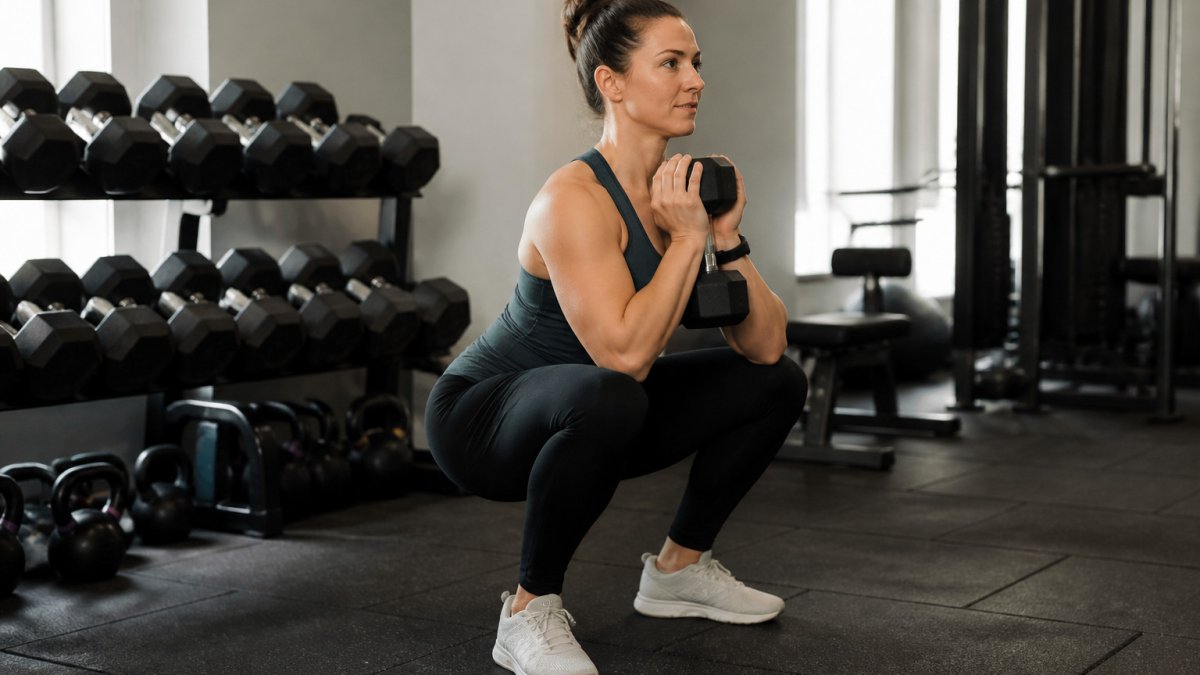
Here is a starter full-body session to try:
- Goblet squat: 3 sets of 8 to 10 reps
- Dumbbell row: 3 sets of 8 to 10 reps per side
- Push-up (incline if needed): 3 sets of 6 to 10 reps
- Glute bridge: 3 sets of 10 to 12 reps
- Plank: 3 holds of 20 to 30 seconds
Rest 60 to 90 seconds between sets. Stop each set when you could do only one or two more clean reps. That is your signal that the weight is right.
Watch out: Do not rush the weight up in week one. Learning clean form first protects your joints and keeps you training consistently.
How Many Days a Week to Lift Weights for Fat Loss
Most beginners do well training full body two or three days per week, with a rest day between sessions. This gives your muscles time to recover while still giving them enough stimulus to grow and hold onto strength.
- Two days: Good for people just starting or short on time
- Three days: A strong default for steady progress
- Four days: Useful once you have a few months of consistent training
More training is not always better. Recovery is where muscle is built, so balance your sessions with sleep and good meals.
Strength Training and Cardio Routine for Fat Loss
Cardio can support fat loss, but it works best alongside strength training rather than replacing it. The two compete for recovery, so placement and dose matter more than total minutes. Keeping cardio moderate and separating it from heavy lifting can help preserve strength and keep fatigue manageable.
Sequencing rules:
- Lift first, cardio second when they share a day. Strength work gets your freshest effort, and the cardio becomes a finisher rather than a drain on your lifts.
- Keep at least six hours between a hard lifting session and a hard cardio session if you split them across the same day.
- Put the longest or hardest cardio on a non-lifting day, not the day before your heaviest lower-body session.
Minimum effective dose:
- Daily steps: Aim for 7,000 to 10,000 steps per day. This is the lowest-fatigue way to raise daily energy burn and is easy to recover from.
- Zone 2 cardio: Two sessions of 20 to 40 minutes per week at a pace where you can hold a conversation. Walking, easy cycling, or an incline treadmill all work.
- Intervals: One short session per week, such as 6 to 8 rounds of 30 seconds hard and 90 seconds easy. Keep it short enough that it does not blunt your next lifting session.
A practical weekly pattern looks like this:
- Strength training on two or three non-consecutive days
- Zone 2 cardio on two other days, 20 to 40 minutes
- One optional interval session, placed at least 48 hours before your heaviest lower-body day
- Daily steps as the base layer every day
Fatigue management: If your lifting loads drop for two sessions in a row, cut cardio volume before you cut strength work. Your lifting sessions matter most for keeping muscle. Signs you are overdoing cardio include poor sleep, persistent soreness, and a resting heart rate that stays elevated.
Do not use cardio to “earn” extra food. That pattern tends to increase hunger and fatigue without improving fat loss. Keep the calorie deficit in your nutrition plan and let cardio support energy balance rather than drive it.
::: (Source: research on the metabolic benefits of muscle mass)
Adjusting for your schedule:
- Three days available: Two full-body lifting days plus one combined day (lift, then 20 minutes of zone 2).
- Two days available: Two full-body lifting days, with daily steps as your only cardio.
- Five or more days available: Three lifting days, two zone 2 days, and one optional interval day, with at least one full rest day.
4-Week Fat Loss Workout Plan with Progressive Overload
Progressive overload means slowly asking your body to do a little more over time. You can add weight, add a rep, or add a set. Change only one thing at a time, and log every session so you know what you actually did last week.
Here is a concrete four-week block built on the full-body session above. Run it two or three days per week on non-consecutive days.
| Week | Focus | Sets x Reps | Rest | Progression Rule |
|---|---|---|---|---|
| 1 | Learn form | 2 x 10 | 60 seconds | Use a load you could lift for 12 clean reps; stop at 10 |
| 2 | Build volume | 3 x 10 | 60 to 75 seconds | Add one set to every exercise; keep the same load |
| 3 | Add weight | 3 x 8 | 75 to 90 seconds | Increase load about 5 to 10 percent on the main lifts; drop to 8 reps |
| 4 | Push a little | 3 x 8 to 10 | 90 seconds | If you hit 10 reps on all three sets, add load next session |
Exercise-level progression rules:
- Goblet squat and dumbbell row: Add load first. These are your biggest compound lifts and drive the most strength and muscle retention.
- Push-up: Progress by lowering the incline before adding reps. A lower surface is harder than an extra rep.
- Glute bridge: Add a pause at the top for two seconds before adding weight.
- Plank: Add five seconds per week until you reach 45 seconds, then add a set.
What to do when a lift stalls: If you miss the top of your rep range for two sessions in a row, drop the load by about 10 percent and build back up over the next two weeks. This is a planned deload, not a failure. A small reset can help restart progress.
Track three numbers per lift: load, reps completed on each set, and rest time. If two of the three are not moving forward across two weeks, your recovery or calorie intake needs a look before you add more training.
Adjusting the block for your level:
- Beginner: Repeat weeks 1 and 2 twice before moving to week 3. Form first.
- Intermediate: Add a fourth strength day using an upper/lower split, and run the same progression rules per lift.
- Home with dumbbells only: Keep the same sets, reps, and rest; substitute a dumbbell floor press for the push-up and a dumbbell Romanian deadlift for the glute bridge.
- Short on time: Pair exercises as supersets (squat with row, push-up with glute bridge) and rest 60 seconds after each pair. You keep the volume and cut the session to about 30 minutes.
After week 4, start a new block with slightly heavier starting loads and the same structure. Repeat for 8 to 12 weeks before taking a lighter week.
Tracking Fat-Loss Progress Beyond the Scale and Adjusting for Plateaus
The scale can mislead you, since water and muscle changes affect the number. Track other signs too, such as how your clothes fit, your waist measurement, your strength numbers, and your energy levels.
If progress stalls for three to four weeks, review your routine. Check whether you are still adding weight or reps, whether you are sleeping enough, and whether your daily intake has drifted up. Small adjustments often restart results.
Safety, Substitutions, and Working With a Clinician on Your Routine
Every body is different. If an exercise causes sharp pain, stop and swap it for a easier option. Good substitutions include a leg press for squats, a band row for dumbbell rows, and a wall push-up for floor push-ups. Our safe weight loss guide for aging adults covers how to adapt a routine to your age and health needs.
If you have a medical condition, joint problems, heart concerns, or take medication that affects exercise, talk with a qualified healthcare professional before starting a new routine. They can help you choose a safe starting point and adjust your plan as you go.
Start Your Fat-Loss Strength Plan with enrG Wellness
Building a strength routine for fat loss is easier with clear guidance and steady support. enrG Wellness, a functional health and wellness clinic in Foley, AL, focuses on root causes and long-term vitality.
If you are ready to get started, explore our weight loss program or take a weight loss assessment to see which approach fits you best. For more on adjusting your eating while you train, read our guide on adjusting caloric intake for weight loss and, if progress has stalled, our guide on breaking a weight loss plateau.
Book an appointment today with enrG Wellness to talk through a fat-loss plan that fits your goals.
Frequently Asked Questions
What is the best strength training routine for fat loss?
The most effective routine for most beginners is a full-body plan performed two to three times a week. It pairs compound lifts such as squats, rows, presses, and hip hinges with a few minutes of conditioning. Choose moderate loads that leave two to three reps in reserve, and add weight or reps each week as the movements feel easier. Consistency across eight to twelve weeks matters more than any single exercise. A licensed clinician can help you adjust the plan around existing health conditions.
How many days a week should I strength train to lose fat?
Most people do well with two to four strength sessions per week, spaced so each muscle group gets a rest day between workouts. Two full-body sessions suit beginners with busy schedules, while three sessions give more room for progression. Adding light cardio on other days supports energy expenditure without interfering with recovery. If fatigue, poor sleep, or joint pain appears, reduce the number of sessions before adding more.
Can strength training help you lose fat without cardio?
Yes. Resistance training preserves and builds muscle during a calorie deficit, and muscle helps keep your metabolism more active than lost muscle would. Fat loss ultimately depends on creating a sustained calorie deficit through diet, activity, or both. Adding walking or other low-intensity cardio can increase total weekly energy expenditure, but it is optional. Track your weekly progress and adjust based on results rather than assuming one method is required.
How many sets and reps should I do for fat loss?
A practical starting point is two to four sets of eight to twelve repetitions per exercise, with rest periods of about 60 to 90 seconds for most movements and slightly longer for heavy compound lifts. Keep one to two reps in reserve on most sets. Increase load or reps over time with progressive overload. Keep form strict, and stop a set if technique breaks down. Workout duration of 30 to 45 minutes is usually enough for a focused session.
