

How to Reduce Chronic Inflammation: 7 Steps That Work
Table of Contents
- Chronic Inflammation Symptoms: Signs Your Body Is Stuck in Overdrive
- Step 1: Get a Baseline Before You Change Anything
- Step 2: Build a Plate With Foods That Fight Inflammation
- Step 3: Make Lifestyle Changes for Inflammation That Stick
- Step 4: Cut the Environmental Triggers Hiding in Your Home
- Step 5: Track What Actually Moves the Needle
- Step 6: Work Through the Mental Blocks That Derail Progress
- Step 7: Know When to Bring In a Professional
- Frequently Asked Questions
Last Updated: September 12, 2026
Chronic Inflammation Symptoms: Signs Your Body Is Stuck in Overdrive
Chronic inflammation is a persistent, low-grade immune response that continues for months or years, quietly damaging tissue even when you feel only vaguely unwell. Unlike acute inflammation, it hides in fatigue, brain fog, and stubborn joint stiffness. (Source: National Institutes of Health (NIH) on omega-3 fatty acids)
Below are seven concrete steps, from getting a baseline to knowing when to bring in a professional.
Chronic inflammation rarely announces itself with pain. It shows up as fatigue, brain fog, and slow recovery, which is why so many people dismiss it for years.
When Tiredness Stops Being Normal
Everyone has tired days. The warning sign is tiredness that survives a full night’s sleep, week after week.
Watch for these chronic inflammation symptoms:
- Waking unrefreshed no matter how long you sleep
- Brain fog that makes familiar tasks feel slow
- Joint stiffness in the morning that eases after movement
- Digestive discomfort that comes and goes without a clear trigger
- Skin flare-ups or slow-healing wounds
One symptom means little. A cluster that persists for weeks deserves attention.
What Blood Work Can and Cannot Tell You
A standard panel often includes C-reactive protein (CRP), a marker the liver produces in response to inflammation. Elevated CRP suggests something is going on, but not why.
Blood work cannot explain your daily experience: a normal CRP does not rule out a problem, and a mildly elevated one does not confirm a diagnosis. Results need context, your history, habits, and how you feel.
Step 1: Get a Baseline Before You Change Anything
You cannot tell whether anything worked without a starting point. Before overhauling your diet or buying a supplement, record where you are now.
Total time: about 30 minutes. Difficulty: beginner.
What to capture:
- Energy level on a 1-10 scale, logged each morning for one week
- Sleep hours and how rested you feel on waking
- Any joint pain, digestive issues, or skin changes
- Recent lab work, including CRP if you have it
- A typical week of meals, honestly written down
Changing five things at once is a common mistake. When everything shifts together, it can be hard to tell which change helped and which one made things worse. Change one variable at a time.
Step 2: Build a Plate With Foods That Fight Inflammation
Food is the lever most people can pull fastest. An anti-inflammatory diet is not a strict regimen but a pattern built on whole foods, fiber, and healthy fats. What separates a pattern that works from one that fizzles is understanding why each food helps.
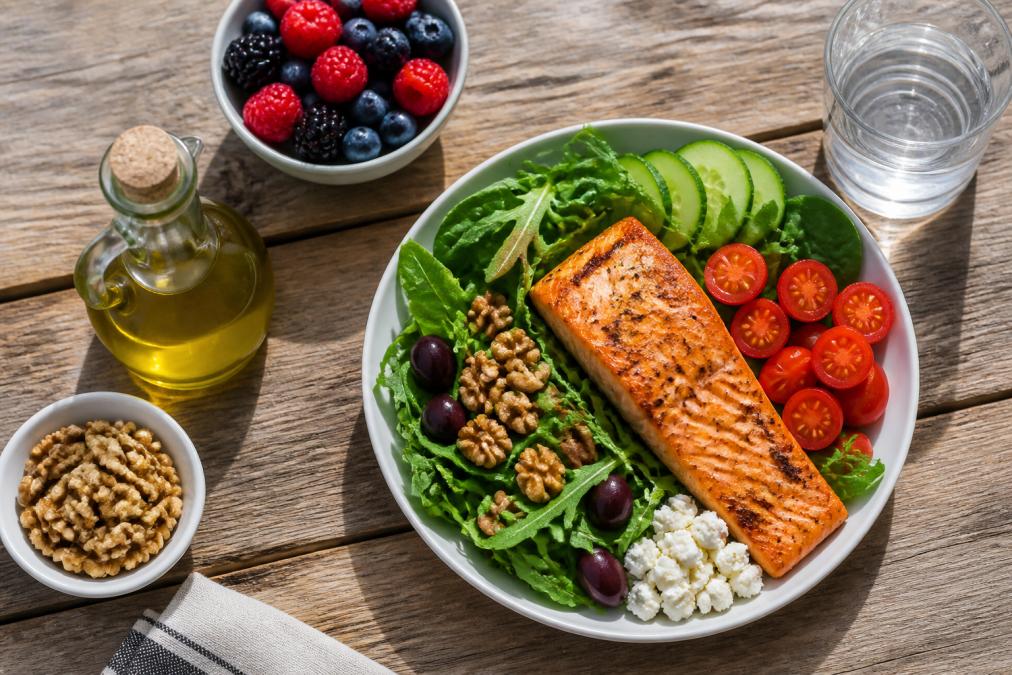
What to Add and What to Cut
Foods that fight inflammation to add, with the mechanism behind each:
- Fatty fish rich in omega-3 fatty acids (salmon, sardines, mackerel), omega-3s compete with arachidonic acid in cell membranes, shifting the body toward fewer pro-inflammatory signaling compounds
- Leafy greens, broccoli, and other cruciferous vegetables, these supply sulforaphane and other polyphenols that support the body’s antioxidant enzymes
- Berries, citrus, and other sources of antioxidants and vitamin C, anthocyanins and flavonoids help neutralize oxidative stress before it damages tissue
- Whole grains and legumes for fiber-rich foods, the most underrated lever on the plate
- Olive oil, nuts, and seeds rich in polyphenols, extra-virgin olive oil contains oleocanthal, studied for its anti-inflammatory activity
Cut back on:
- Processed foods and refined sugars, these drive blood sugar spikes that trigger repeated insulin and cytokine responses
- Trans fats and heavily fried items, industrially produced trans fats have a clear, consistent link to elevated inflammatory markers
- Sugary drinks, which spike blood sugar and add oxidative stress without fiber to slow absorption
- Excess alcohol, which burdens the liver and disrupts sleep architecture
The Dietary Guidelines for Americans provide a solid framework for building meals around these foods without counting every gram.
Why Fiber Deserves Its Own Paragraph
Most anti-inflammatory food lists mention fiber in passing, but it does two jobs at once. Soluble fiber feeds gut bacteria that produce short-chain fatty acids like butyrate, which help regulate immune response in the gut lining. It also slows glucose absorption, flattening the blood sugar spikes that trigger inflammatory signaling.
A practical target most adults can aim for is roughly 25 to 35 grams of fiber per day. To get there without counting:
- Half a cup of cooked black beans: about 7 grams
- One cup of cooked oatmeal: about 4 grams
- One medium avocado: about 10 grams
- One cup of raspberries: about 8 grams
Add one fiber source to each meal and you close most of the gap without a spreadsheet.
How to Read a Label for Inflammatory Ingredients
Package claims are marketing. The ingredient list is the truth. A few habits cut through the noise:
- Scan the first five ingredients. They make up the bulk of most products. If sugar, refined flour, or a hydrogenated oil appears there, the product is working against you.
- Watch for sugar under other names. Cane syrup, dextrose, maltose, rice syrup, and fruit juice concentrate are all sugar. A product can list four and never use the word “sugar.”
- Look for “hydrogenated.” Any partially hydrogenated oil means trans fat, even if the panel rounds it to zero.
- Ignore front-of-package claims. “Natural,” “wholesome,” and “made with real fruit” carry no regulatory weight for inflammation purposes.
- Check the fiber-to-sugar ratio. A cereal with 12 grams of sugar and 1 gram of fiber is dessert. One with 4 grams of sugar and 5 grams of fiber is breakfast.
Eating Well on a Budget
Anti-inflammatory eating has a reputation for being expensive, but it does not have to be. Frozen vegetables and berries cost less than fresh and retain most nutrients. Canned sardines and tuna are among the cheapest omega-3 sources. Dried beans and lentils deliver fiber for pennies. Buy produce in season and skip specialty powders, most have far less evidence behind them than a bag of frozen spinach.
If you change only one thing this week, add a fiber source to breakfast. It is the lowest-effort change with the widest downstream effect on blood sugar, gut bacteria, and appetite.
Step 3: Make Lifestyle Changes for Inflammation That Stick
Diet alone rarely solves the puzzle. Lifestyle changes for inflammation work best when movement, sleep, and stress management reinforce each other. But knowing what to do is easy; doing it while tired, achy, and short on time is the real problem.
Movement, Sleep, and Stress in One Routine
Physical activity lowers inflammatory markers, but intensity matters. Moderate-intensity exercise, such as a brisk 30-minute walk, tends to help more than exhausting sessions that leave you sore for days. Very hard training is itself a stressor, and when recovery is poor, it adds to the inflammatory load instead of reducing it.
Sleep hygiene is not optional. A consistent bedtime, a dark cool room, and no screens for the last hour support cellular repair overnight. Short sleep raises CRP and other inflammatory markers in otherwise healthy adults, making sleep the first domino (PubMed). (Source: Centers for Disease Control and Prevention (CDC) on chronic diseases)
Stress management belongs in the same routine, not a separate category. Chronic stress keeps cortisol elevated, which feeds systemic inflammation. Ten minutes of slow breathing or a short walk after dinner counts.
| Area | What to Do | How Often |
|---|---|---|
| Movement | Brisk walk or light strength work | 5 days per week |
| Sleep | Fixed bedtime, dark cool room | Every night |
| Stress | Breathing, meditation, or a walk | Daily, 10 minutes |
| Hydration | Water with meals, more in heat | Throughout the day |
The Behavioral Problem Nobody Addresses
Almost every article on inflammation tells you to exercise more, sleep better, and stress less. Almost none explain how to do those things when chronic fatigue and joint pain are working against you.
Three patterns derail people, and each has a fix:
1. The motivation trap. Waiting to feel inspired guarantees inconsistency; motivation follows action. Lower the activation energy: lay out walking shoes the night before, put the water bottle on the counter, set the meditation app to open on your home screen. Remove one decision and you remove one place to quit.
2. Habit stacking. Attach the new behavior to something you already do without thinking. Walk after your morning coffee. Do breathing exercises while the kettle boils. Take your fiber with the meal you never skip. The existing habit becomes the cue, and the new behavior rides along.
3. The all-or-nothing collapse. One missed workout becomes a lost week. One “bad” meal becomes a lost month. The fix is a floor, not a ceiling: define the smallest version of the habit that still counts, a ten-minute walk, one glass of water, five slow breaths, and commit to that on bad days. Consistency at a low bar beats intensity that collapses.
If you have chronic pain or fatigue, do not start with the most ambitious version of any habit. Start with the version you are 90 percent sure you can do on your worst day. You can always scale up. Scaling down after a collapse is much harder.
A Realistic Weekly Template
A plan that assumes perfect energy fails. This one assumes you will have bad days:
- Good days: 30-minute brisk walk, full breathing session, bedtime on schedule
- Medium days: 15-minute walk, 5 minutes of breathing, bedtime within 30 minutes of target
- Bad days: 5-minute walk or gentle stretching, 3 slow breaths, lights out on time
Every day counts. The goal is not a perfect week. The goal is a week with no zero days.
Track your habit completion, not your symptom severity, for the first month. Symptoms lag behind behavior by weeks, and if you judge the plan by how you feel on day four, you will quit before the payoff arrives.
Step 4: Cut the Environmental Triggers Hiding in Your Home
Most guides stop at diet and exercise, but inflammation triggers are not only on your plate.
Common household sources:
- Air fresheners and scented candles that release synthetic fragrances
- Harsh cleaning sprays, especially those with strong fumes
- Old nonstick pans with scratched coatings
- Mold and damp in bathrooms, basements, and around windows
- Pesticide residue on conventionally grown produce
You do not need to overhaul your home in a weekend. Swap one category at a time: unscented cleaning products first, then ventilation, then cookware.
Step 5: Track What Actually Moves the Needle
Measurement is where most people quit, and where the payoff hides. Without tracking, you are guessing.
Keep it simple. A notebook or a phone note works fine:
- Rate energy, sleep, and any pain each morning on a 1-10 scale
- Note what you ate the day before and whether you exercised
- Review monthly, not daily
After four to six weeks, patterns appear. Maybe your best days follow nights you slept seven hours. Maybe dairy correlates with your joint stiffness. That is information no generic plan can give you.
Track one new variable at a time and give it at least two weeks. Short-term tracking produces noise, not signal, and most people abandon the habit before the pattern shows up.
Step 6: Work Through the Mental Blocks That Derail Progress
The behavioral side of inflammation gets almost no attention, yet it is where progress stalls. Three barriers show up repeatedly:
All-or-nothing thinking. One missed workout becomes a lost week. Lower the bar: a ten-minute walk still counts.
Motivation dependence. Waiting to feel inspired guarantees inconsistency. Habit stacking works better: attach the new behavior to something you already do, like walking after your morning coffee.
Scale obsession. If the scale does not move, people quit, even when energy and sleep are clearly better. Track how you feel, not just how you look.
Step 7: Know When to Bring In a Professional
Some cases need more than lifestyle adjustments. If fatigue, brain fog, or joint pain persist after weeks of consistent effort, a clinical evaluation can identify what self-directed changes cannot.
Functional medicine looks for root causes, not just symptom relief, a closer look at metabolic health, gut microbiome balance, thyroid function, or nutrient gaps a standard panel misses.
At enrG Wellness, our clinical team builds personalized plans around your history and labs. For readers dealing with unresolved fatigue or inflammation, a root-cause approach can be the difference between another temporary fix and lasting change.
CDC overview of chronic disease and inflammation
Chronic inflammation rarely resolves through a single change. It yields to consistent, measured effort across food, movement, sleep, stress, and environment, and to clinical guidance when self-directed steps stall. If you have been told your labs are normal while your energy keeps sliding, enrG Wellness can help you find the root cause. Our team offers personalized, results-driven care, a supportive clinical team, and tailored wellness plans built around your goals. Book an appointment today and start restoring your energy.
Frequently Asked Questions
How can I reduce inflammation in my body?
Start with diet and daily habits. Build meals around foods that fight inflammation like fatty fish, leafy greens, berries, and whole grains, and cut back on processed foods and refined sugars. Add moderate-intensity exercise most days, protect your sleep, and manage stress. Because chronic inflammation has many drivers, tracking symptoms and lab markers helps you see what is working. A functional medicine provider can help identify your specific triggers.
What does chronic inflammation feel like?
Common chronic inflammation symptoms include persistent fatigue, brain fog, joint stiffness, digestive issues, and skin flare-ups. Many people describe feeling run down for months without a clear cause. Because these symptoms overlap with other conditions, blood work such as C-reactive protein can help clarify what is happening. If fatigue or pain lasts more than a few weeks, talk with a qualified provider about evaluation.
Can you reverse damage from chronic inflammation?
Some effects can improve significantly with sustained lifestyle changes. Reducing oxidative stress through an anti-inflammatory diet, regular physical activity, and better sleep hygiene supports cellular repair and metabolic health. How much you can reverse depends on how long inflammation has been active and what caused it. A provider can assess your situation and build a plan that targets your root causes rather than just managing symptoms.
How does diet impact systemic inflammation levels?
Diet is one of the strongest levers you have. A Mediterranean diet rich in omega-3 fatty acids, polyphenols, fiber-rich foods, and antioxidants is linked to lower systemic inflammation. Processed foods, refined sugars, and trans fats push it higher. Small changes add up: swap white bread for whole grains, add legumes to one meal a day, and use olive oil instead of butter. Give any change at least four to six weeks before judging results.